
Chinese Fishing Nets
Legend has it that the famous Chinese explorer, Zheng He, introduced the Chinese Fishing Nets to the fishermen in Kochi over 500 years ago. Even after he left, these fishing nets or Cheenvala in local language, have attracted visitors to Fort Kochi area ever since. It is possible to see the Cheenvala in action and even participate in assisting the fishermen operate one of these nets which are constructed of bamboo and teak poles.

Santa Cruz Cathedral
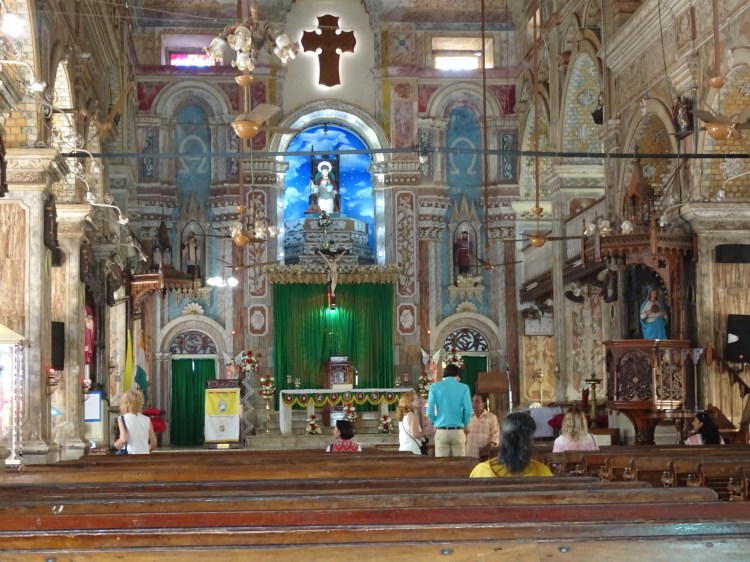
The Santa Cruz Cathedral Basilica in Cochin is one of the eight Basilicas in India. It dates back to the sixteenth century with the arrival of Portuguese missionaries in 1500 CE. The foundation stone was laid on May 3, 1505, the feast day of the ‘Invention of the Holy Cross’, hence the church was named Santa Cruz. The church has undergone some serious demolition and re-erection with the present structure consecrated on 19 November 1905. In 1984 Pope John Paul II raised the status of Santa Cruz Cathedral to Basilica for its antiquity, artistic dignity and historical importance.
Dhobi Khana Laundry
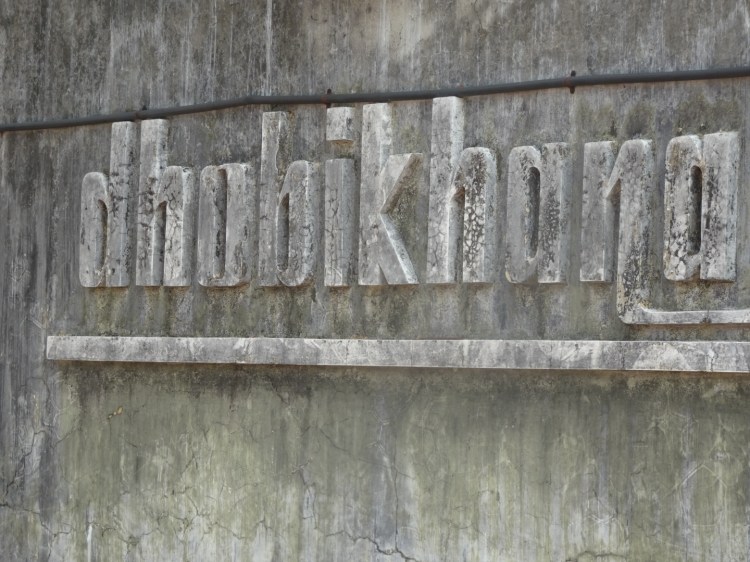
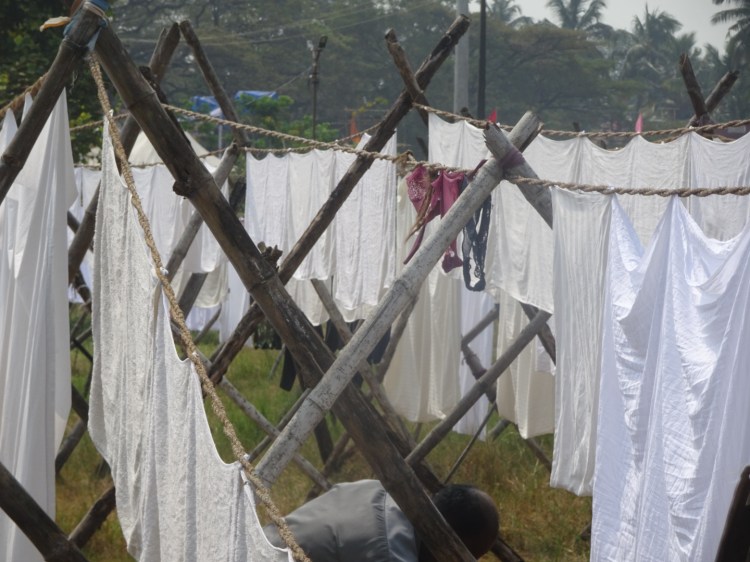
Dhobi Khana at Veli in Fort Kochi is where the Tamil-speaking Vannan community carry out laundry works, the profession practiced by the community traditionally. This practice has been traced back to the colonial period when the Vannans were brought by the King of Kochi from Coimbatore and Tirunelveli to wash the army uniforms of the Portuguese or the Dutch. Prior to the setting up of a sangham or society at the present site , they carried out their work at 70 ponds in 13 acres of land which were owned by them. Now there are around 40 to 45 cubicles in two-to-three acres of land. Each cubicle is given to a different family and a pool of water is also provided for each cubicle. They use the traditional method of soaking the clothes in bleach and detergent water and then washing by beating on a laundry stone. While some still use the traditional charcoal iron to iron the clothes, a few have changed to the electrical iron.

Bazar Road
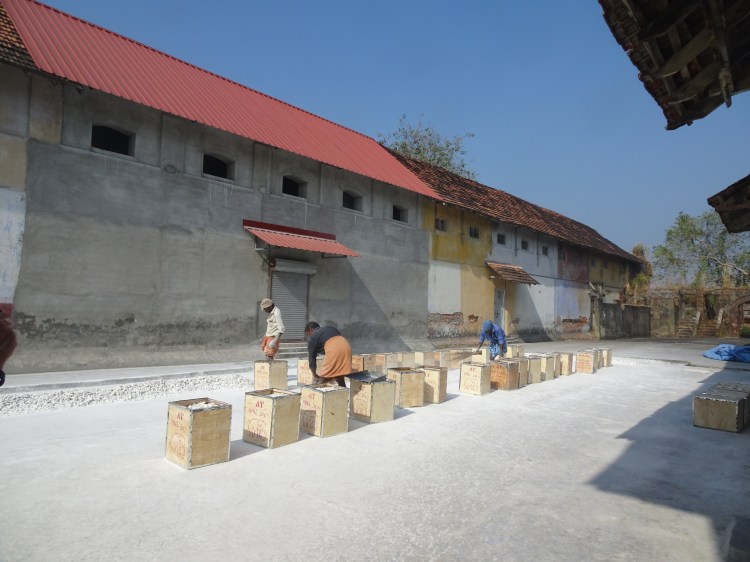
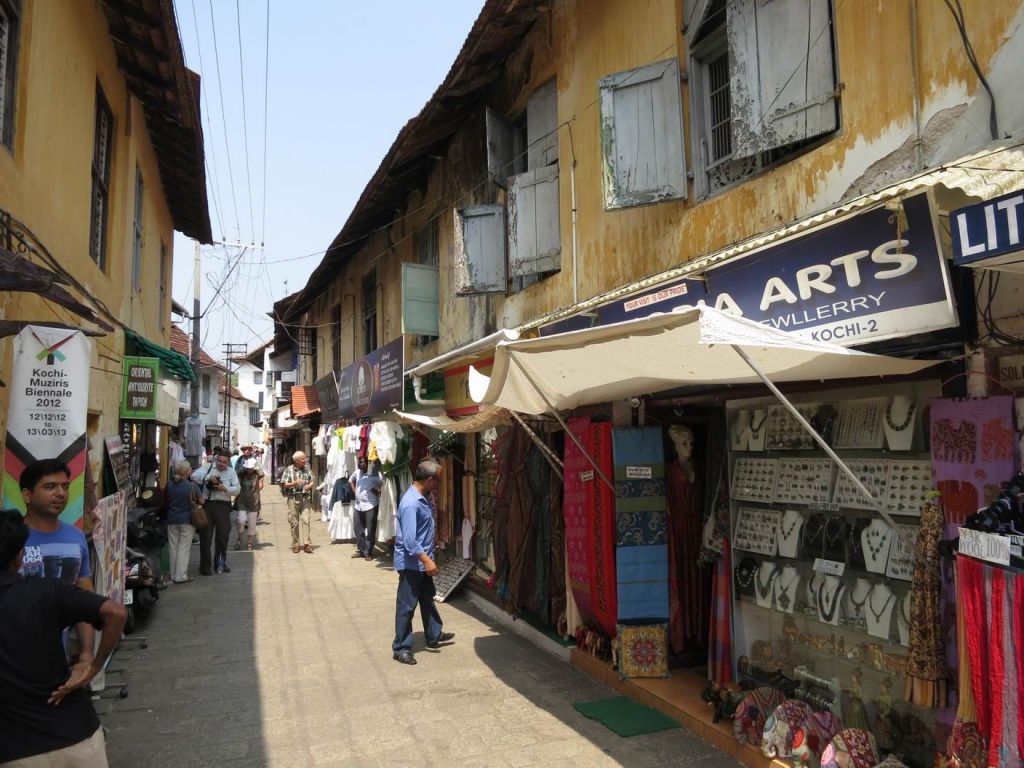
Kochi’s evolution as a major port and international hub for spice trade in the 14th century saw Bazar Road made as the main link road connecting the port and the market. Bazar means market and Bazar Road became the main place in Kochi where traders from all parts of the world came for trade and people from different parts of India came in search of jobs. It became the busiest place in Kochi.
As this place saw the migration of peoples from different cultures, it can be seen as a marker of the cosmopolitanism of Kochi. Although Malayalam is the native language of Kerala, one can find people speaking atleast fifteen different languages as they carry out trade and do their work on Bazar Road. It is here you will see spice warehouses such as the Ginger Warehouse lining the street, with workers and trucks unloading, packaging and selling all varieties The aroma of the finest ginger, cloves, cardamom, turmeric and pepper fills the air.
Jewtown
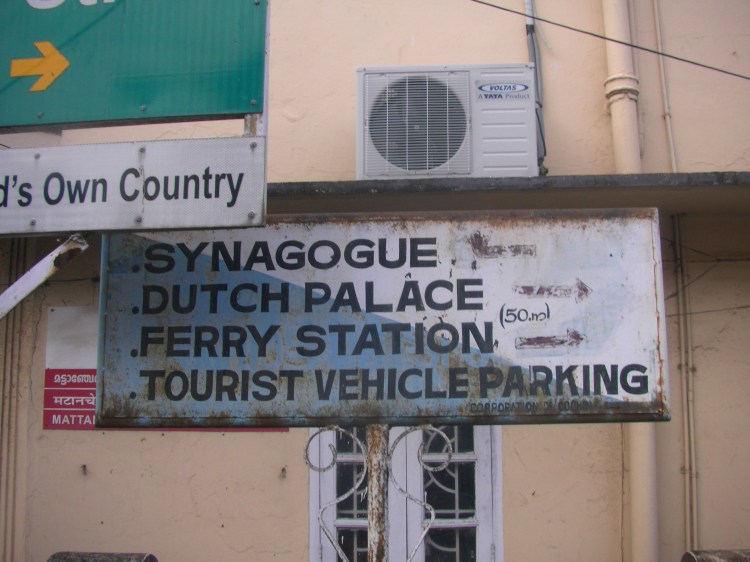
India’s Jews have a long history in Kochi, reputedly first arriving as the descendants of traders from the time of King Solomon’s reign (circa 970 to 931 BC) and landing in present day Kodungallur, 47km to the north. Sometime between 379 and 1000 (date contested), Chera Dynasty king Bhaskara Ravi Varma, bestowed a gift of copper plates to the tribe, giving 72 privileges to the community, including the freedom to practice their religion and tax exemption “as long as the world and the moon exist”. In the 14th Century, the Jewish community and temple moved south due to flooding further north, and in 1344 they built Kochangadi Synagogue in Ernakulam, Cochin’s first synagogue.
In 1492, a group of Sephardic Jews expelled from the Iberian Peninsula came to Cochin. During Portuguese persecution in the 16th Century, they were granted sanctuary by the Hindu Rajah of Cochin and the present day Paradesi synagogue was built in 1568 on granted land and the Jew Town neighbourhood built up around it. They are known as the Paradesi (Foreign) Jews, and at its peak in the 1950s, there were a total of 250 Jews in the thriving then most immigrated to newly founded Israel. The community’s absolute acceptance was shown in 1968, when the synagogue celebrated its 400th anniversary of refuge and was given a mazeltov (congratulations) by then Prime Minister of India, Indira Gandhi.
Hill Palace
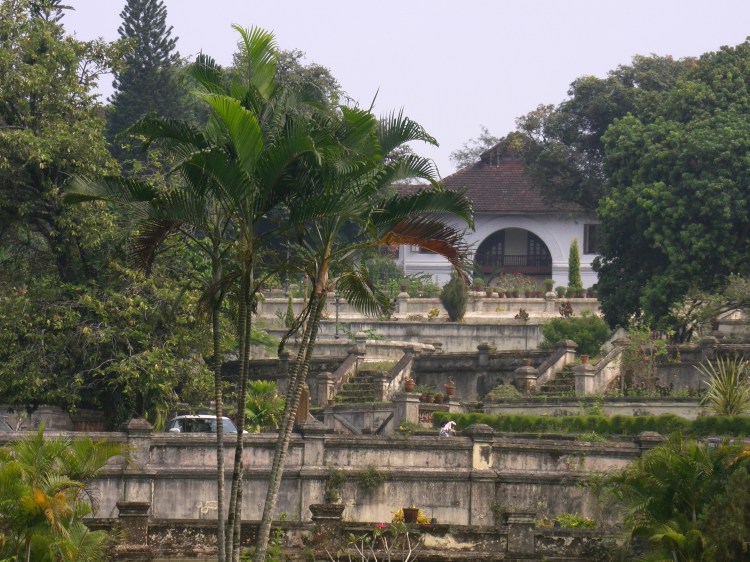
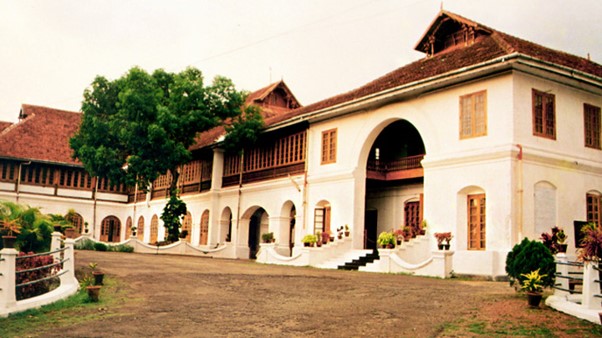
Hill Palace Museum Built in 1865 was the official residence of the rulers of Kochi and is now an Ethno-Archaeological and Heritage Museum. The palace complex itself comprises 49 buildings and is built in the traditional Kerala style of architecture with over 52 acres of terraced land around it.
The museum houses oil-paintings, murals, sculptures, manuscripts and belongings of the Kochi royal family as well as antique ceramics from the Far East, Kudakkallu (tombstone), Thoppikkallu (hood stone), laterite memorials and wooden memorials from ancient civilisations like the Indus Valley and Harappa.
Dutch Palace
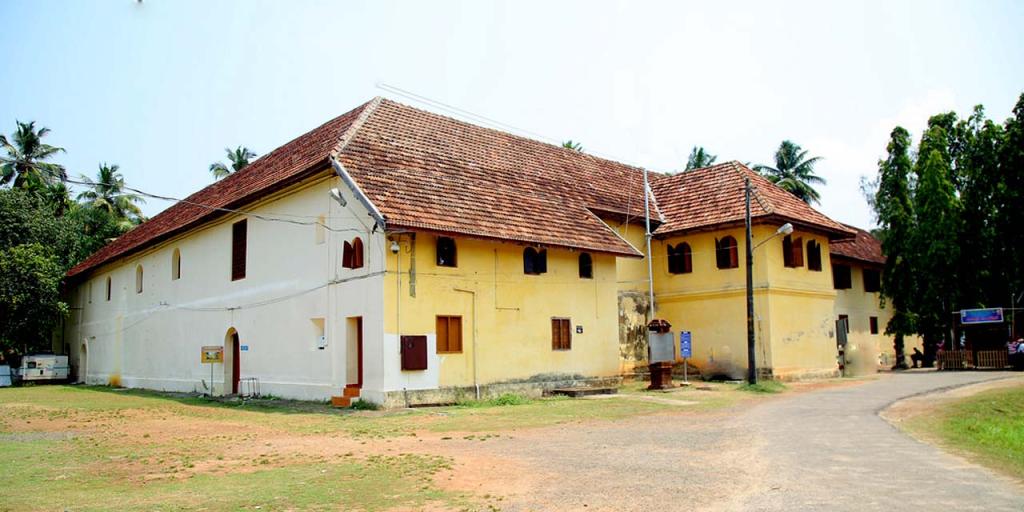
The Mattancherry Palace, also known as Dutch Palace, is one of the finest examples of the Kerala style of architecture interspersed with colonial influences. It was built around 1545 C.E. by the Portuguese as a present to King Veera Kerala Verma of Kochi dynasty and came to be known as the Dutch Palace as it underwent major repairs at the hands of the Dutch. This double storied palace has a lovely collection of murals depicting some of the great Indian epics like Ramayana and Mahabharata along with revered Gods of the Hindu faith like Lord Krishna of Guruvayur Temple. The great works of Sanskrit poet Kalidasa have also been depicted as well as exhibits portraying the lives of the royal family including life-size portraits of the Kings of Cochin since 1864, sheathed swords, daggers and axes besides ceremonial spears decorated with feathers.
St Francis Church
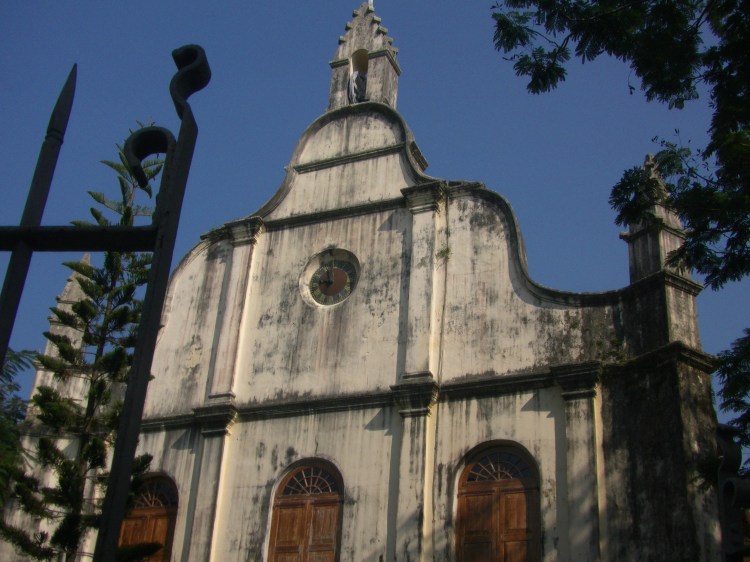
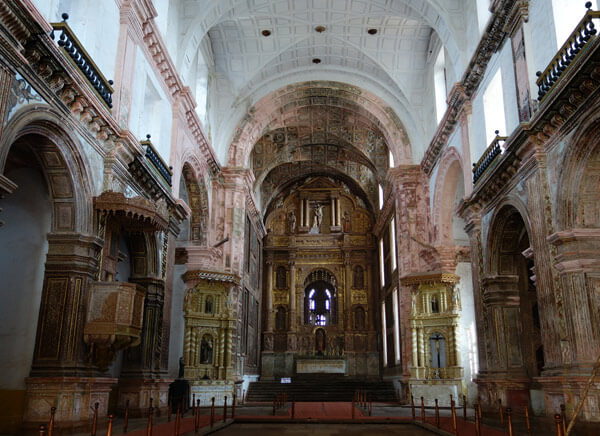
Saint Francis Church was originally built in 1503, and is one of the oldest European churches in India and has important historical significance as the Portuguese explorer Vasco da Gama, who died in Kochi in 1524 when he was on his third visit to India, was originally buried in this church. After fourteen years his remains were removed to Lisbon.
Vasco da Gama, who discovered the sea route from Europe to India, landed at Kappad near Kozhikode (Calicut) in 1498. He was followed by Pedro Álvares Cabral and Afonso de Albuquerque. They built Fort Emmanuel at the Fort Kochi Beach with permission from the Raja of Cochin. Within the fort, they built a church with a wooden structure,and in 1506, it was rebuilt presumably by the Franciscan friars, with bricks and mortar and a tiled roof and completed In 1516.
The Koonan Kurishu Old Syrian Church
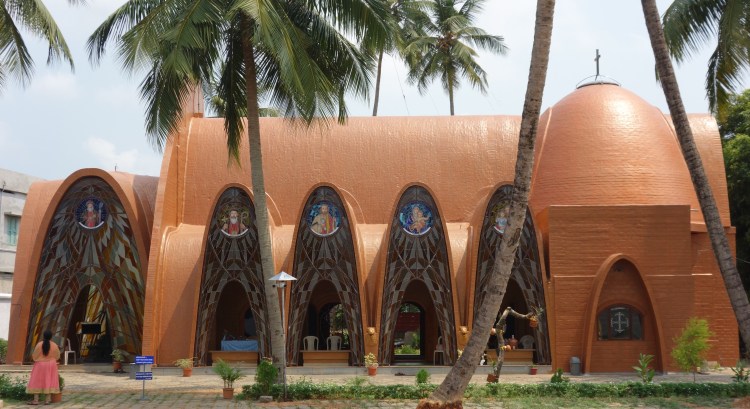
The Koonan Kurishu Old Syrian Church of Mattancherry, one of the oldest churches in India. is a revered pilgrim center and has played a significant role in the historic event that shaped the leadership of the Malankara Church as it is today. The present Church was built on the land where the historical Koonan Kurishu Sathyam (Coonan Cross Oath) took place in AD 1653 and was renovated in 2016 in an eco friendly Nubian style by architect Vinu Daniel.oof and completed In 1516.
The Koonan Kurishu Sathyam refers to the action of thousands of native Christians assembling before the church and taking an oath to preserve the traditions followed by them since AD 52 and to resist the attempts to impose the Roman rituals amongst the native Christians. “The incident is the first attempt to resist colonialism and western invasion in the country”.
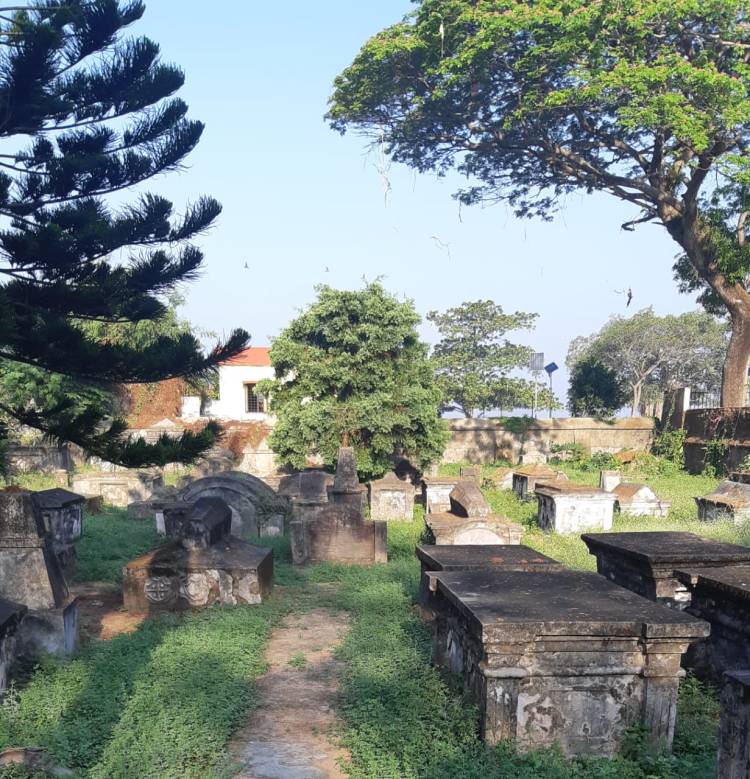
Dutch Cemetery
The Dutch cemetery, which was consecrated in 1724, is believed to be the oldest in the country. It was built in the style of the Dutch architecture of the time, is surrounded by walls and the year 1724 is engraved on the entrance pillar. The 104 epitaphs and tombs carry the authentic records of hundreds of people of Dutch and British nationality and many are made of granite and red laterite and have no cross with the epitaphs in old Dutch script
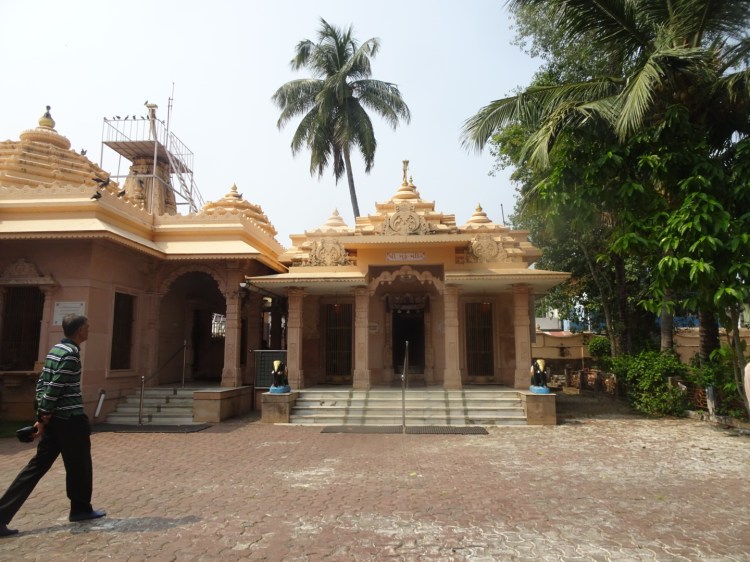
jain temple
Built in 1960, the Jain Temple, dedicated to Shri Dharmanath, the 15th Jain Tirthankar, is a prominent religious institution in Mattancherry. An embodiment of the cultural confluence of the region, the temple complex is spread over a large area with various blocks constructed for prayers and as sites for offerings. The architecture of the temple takes its inspiration from the Jain temples of Gujarat.
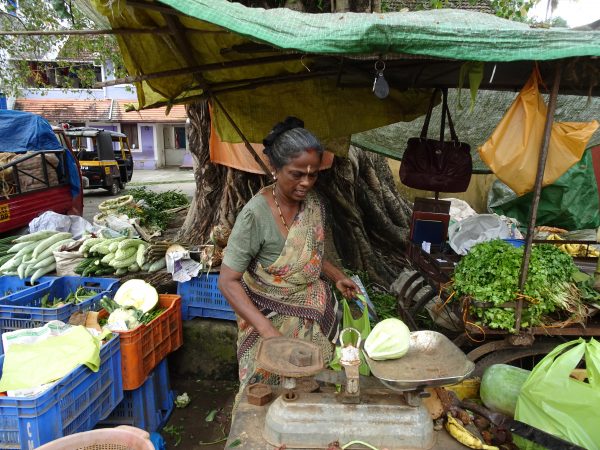
markets
Visit markets where the locals shop.
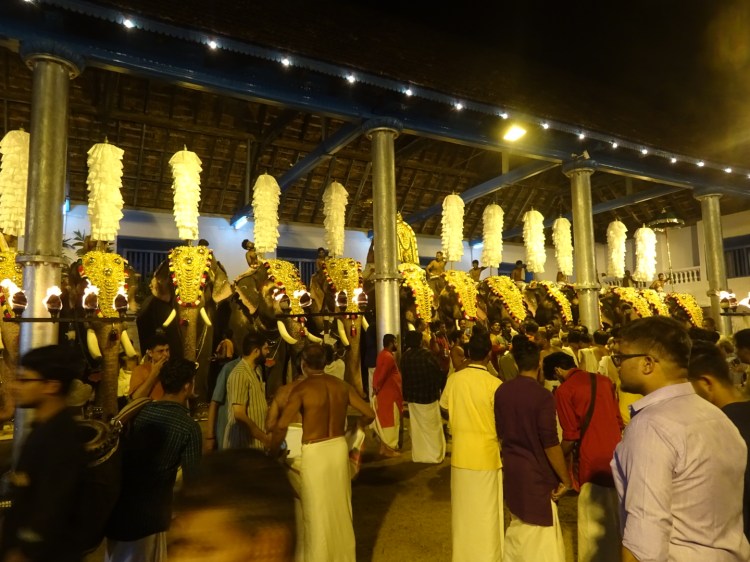
temples
If you are lucky to visit Kochi in Temple festival season.
beaches
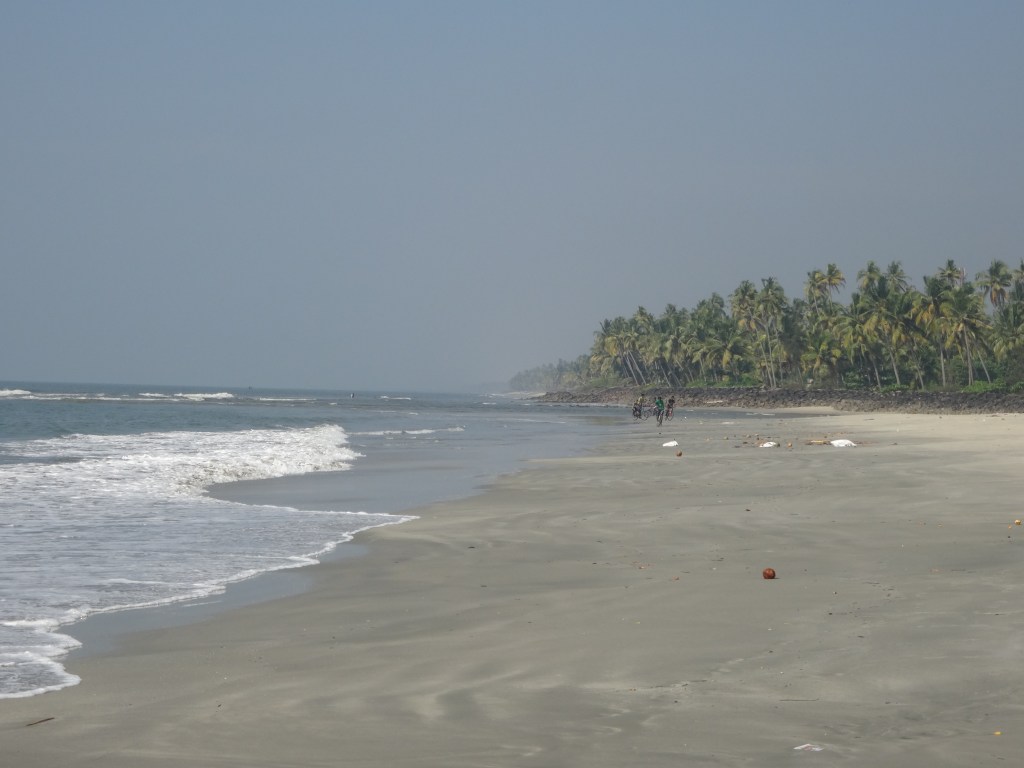
North and south of Fort Kochi are many interesting beaches.
 Maheen: best tuktuk adventure tours in Kochi